Historic Hyde Park Home, WickRight Reverses Issues Caused by Repointing with Type N Mortar - Evaluation 2021
Evaluation from WickRight General Contracting archives - 11/14/21 -
S. Woodlawn, Hyde Park, Chicago, Il
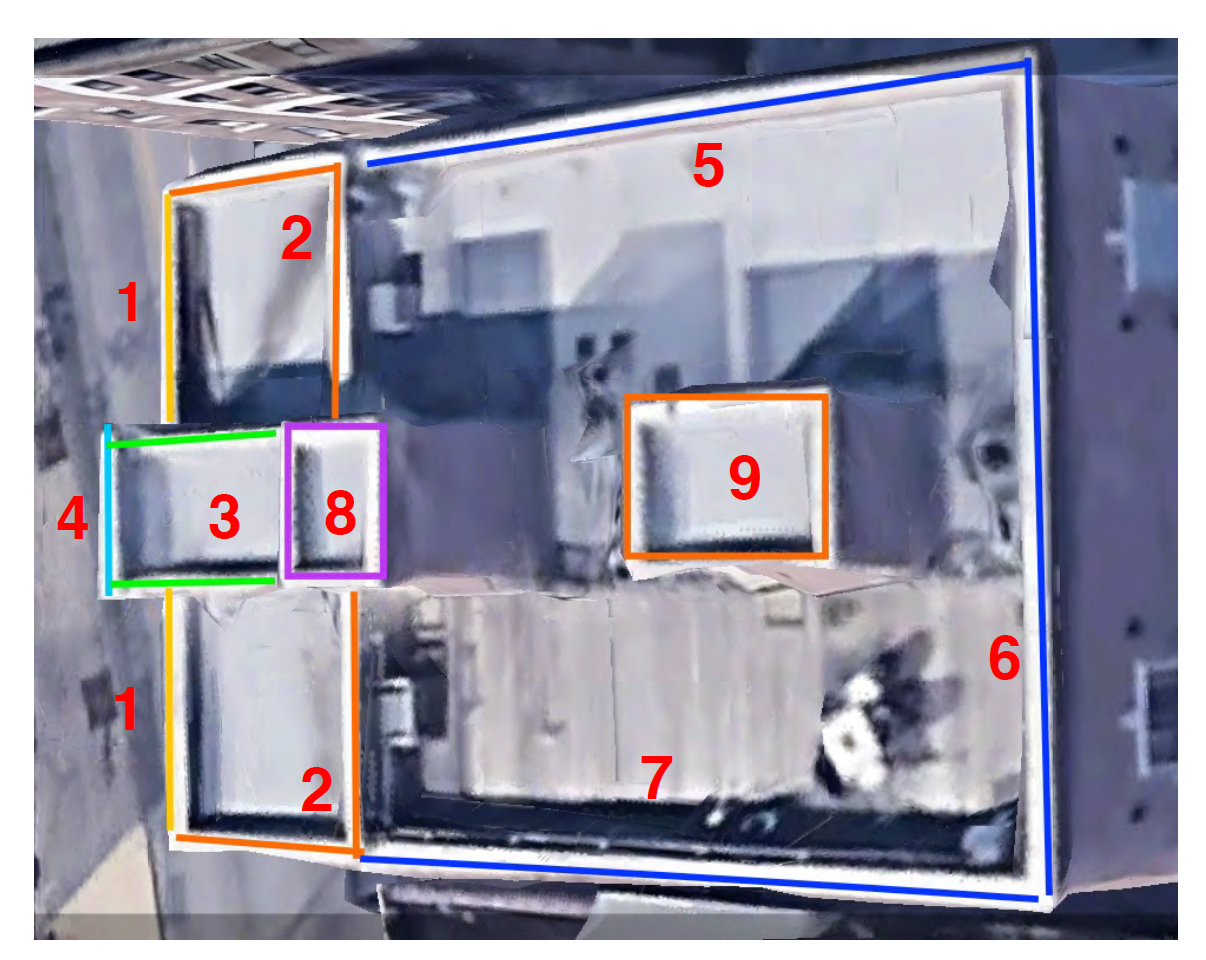
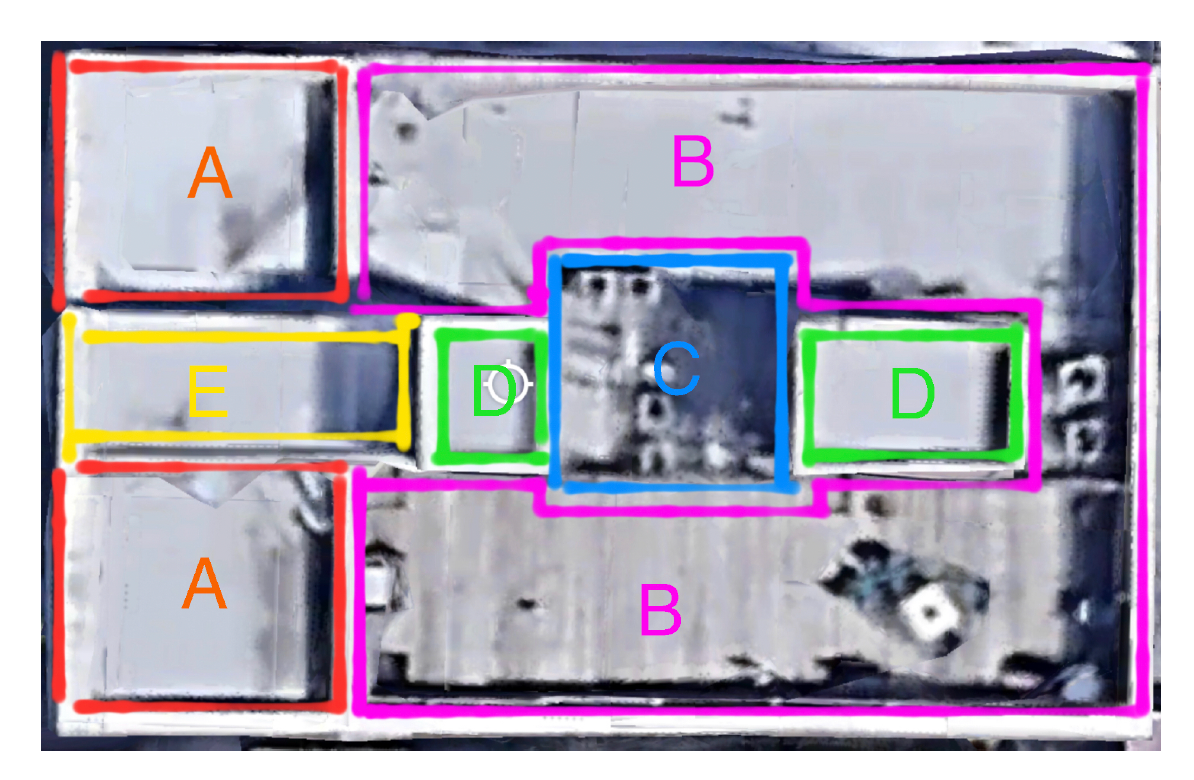
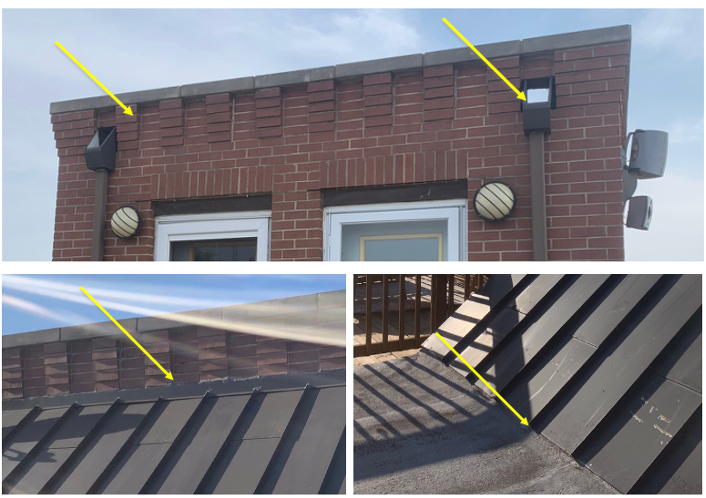
There are several issues happening on your home. Most of the issues are related to the building's age and the use of modern materials (insulation and Type N mortar) and/or installation methods that are not compatible with the historic materials. Between these two situations, moisture is accumulating and needs to be evacuated. To manage the moisture in the building, it needs to be vented. The areas to be vented are the parapet coping, top of the mansard and the roofing at the interior the parapet wall.
Insulation:
The air space once used to diffuse water vapor from the structure is now full of insulation. The insulation is allowing water vapor to accumulate, consequently moisture is building up at the peak of the roof, dripping down and damaging the interior plaster walls. The water staining is at the same location on either side of the home lines up with the peak of the roof. I often find roof systems with less insulation allow vapor diffusion; more insulation holds the water. Right now moisture is lofting to the high point of the roof.
Masonry:
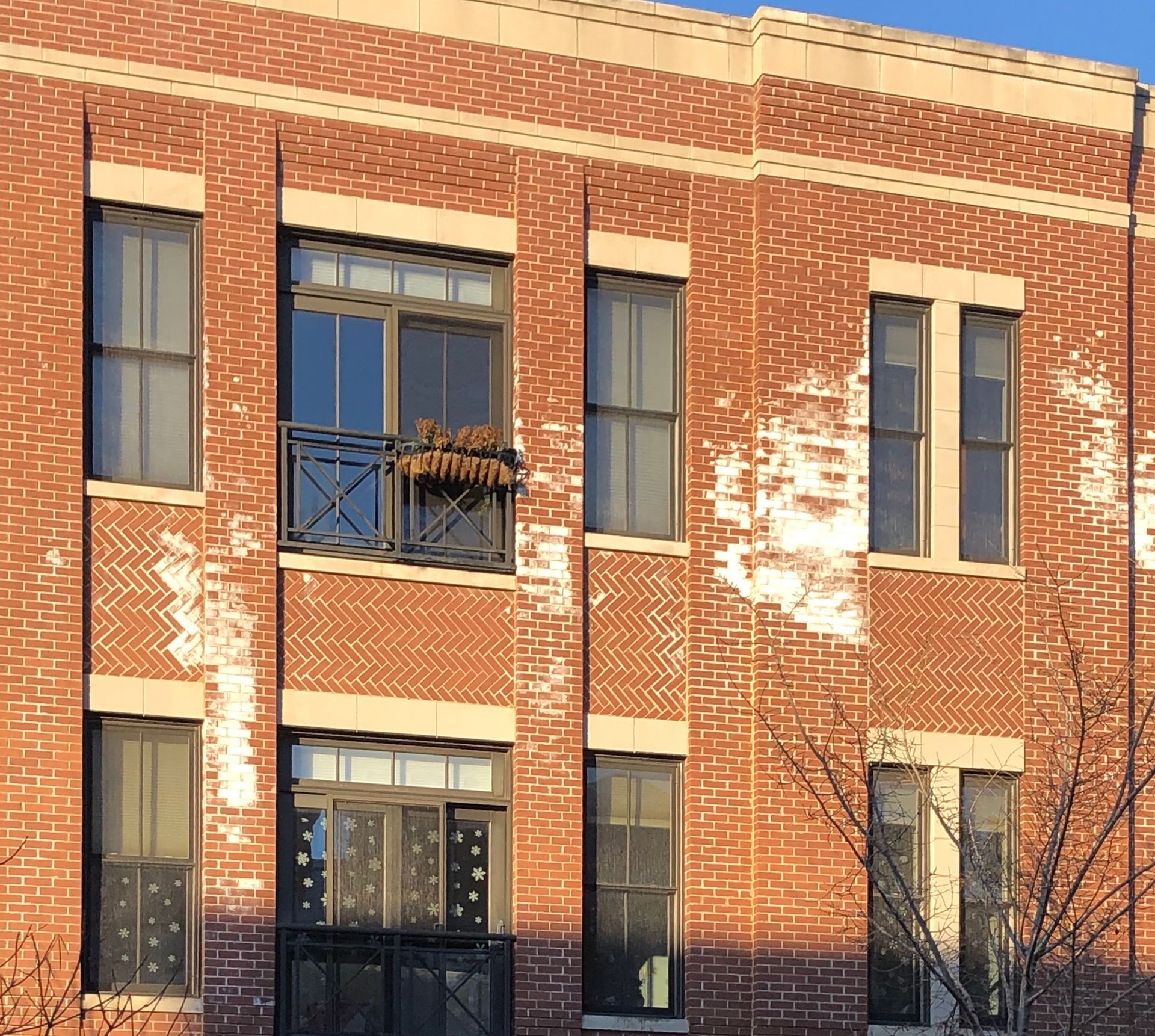
The building was re-pointed with mortar that's too hard and cut off the breathability of the original lime mortar. It is a common masonry mistake on historic buildings. The harder mortars such as this is, are not waterproof and trap moisture. Source of the moisture is always from the masonry.
Masonry Sealant: Normally, a historic building would not need to be sealed, because lime mortars are autogenous – they absorb and release moisture. Unfortunately, Type N mortar was used for re-pointing, which requires sealant. Apply a waterproofing sealant to reduce the bulk water from entering the building envelope is necessay. If we need to grind and point the walls, cost will be on an “as need” basis.
Parapet capstone flashing and venting:
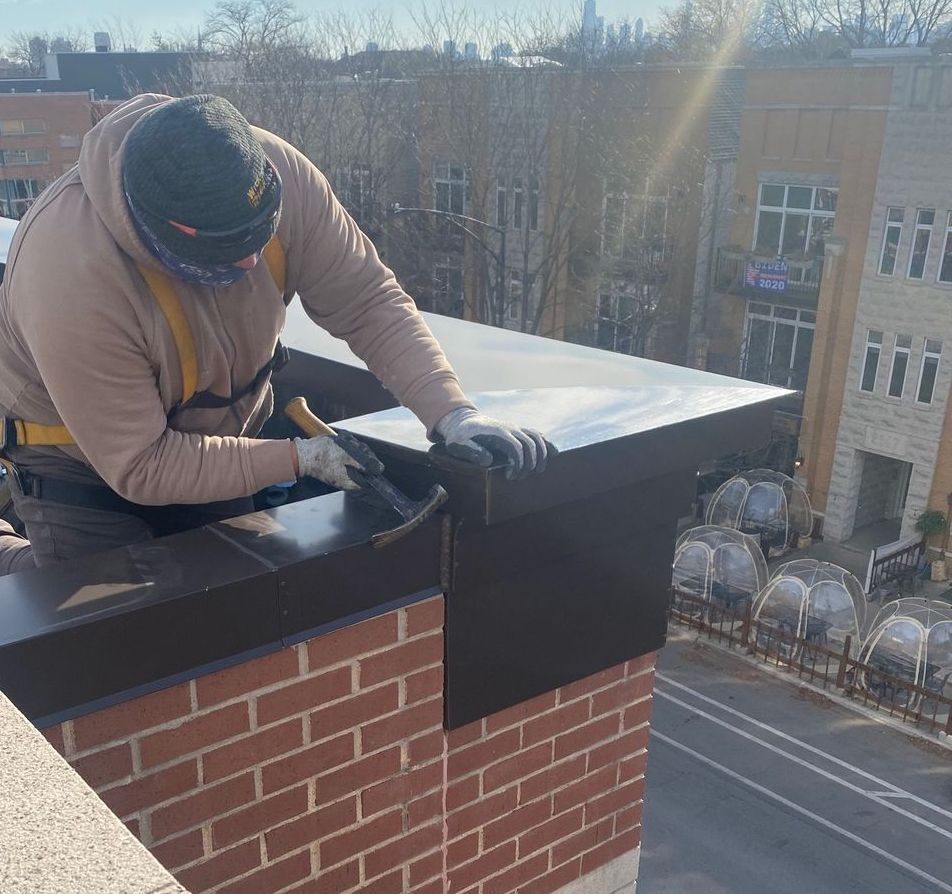
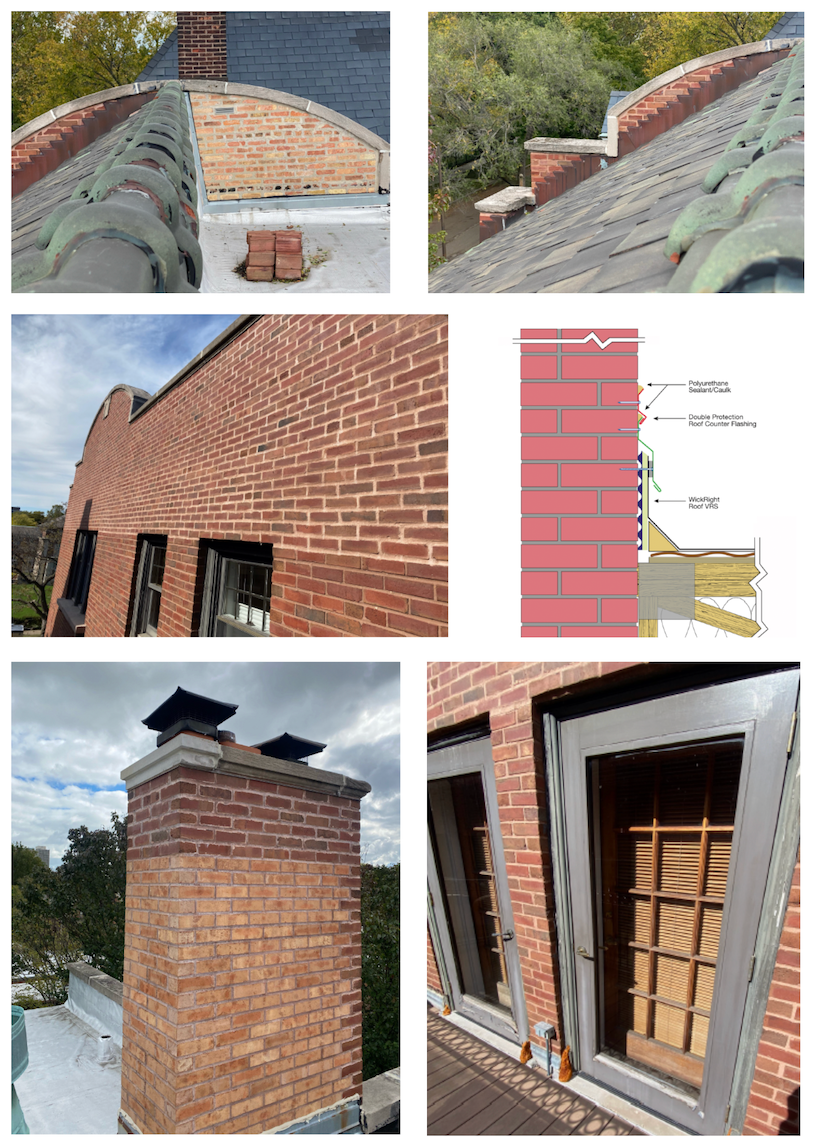
Remove and reset capstones on both sides of the roof with vented flashing
Mansard roof ridge: Rework and vent top of mansard roof. Remove and reset limestone capstones on the mansard roof.
Install chimney caps on front and rear chimney:
Chimney caps need to be installed in conjunction with venting the mansard ridge to take advantage of access.
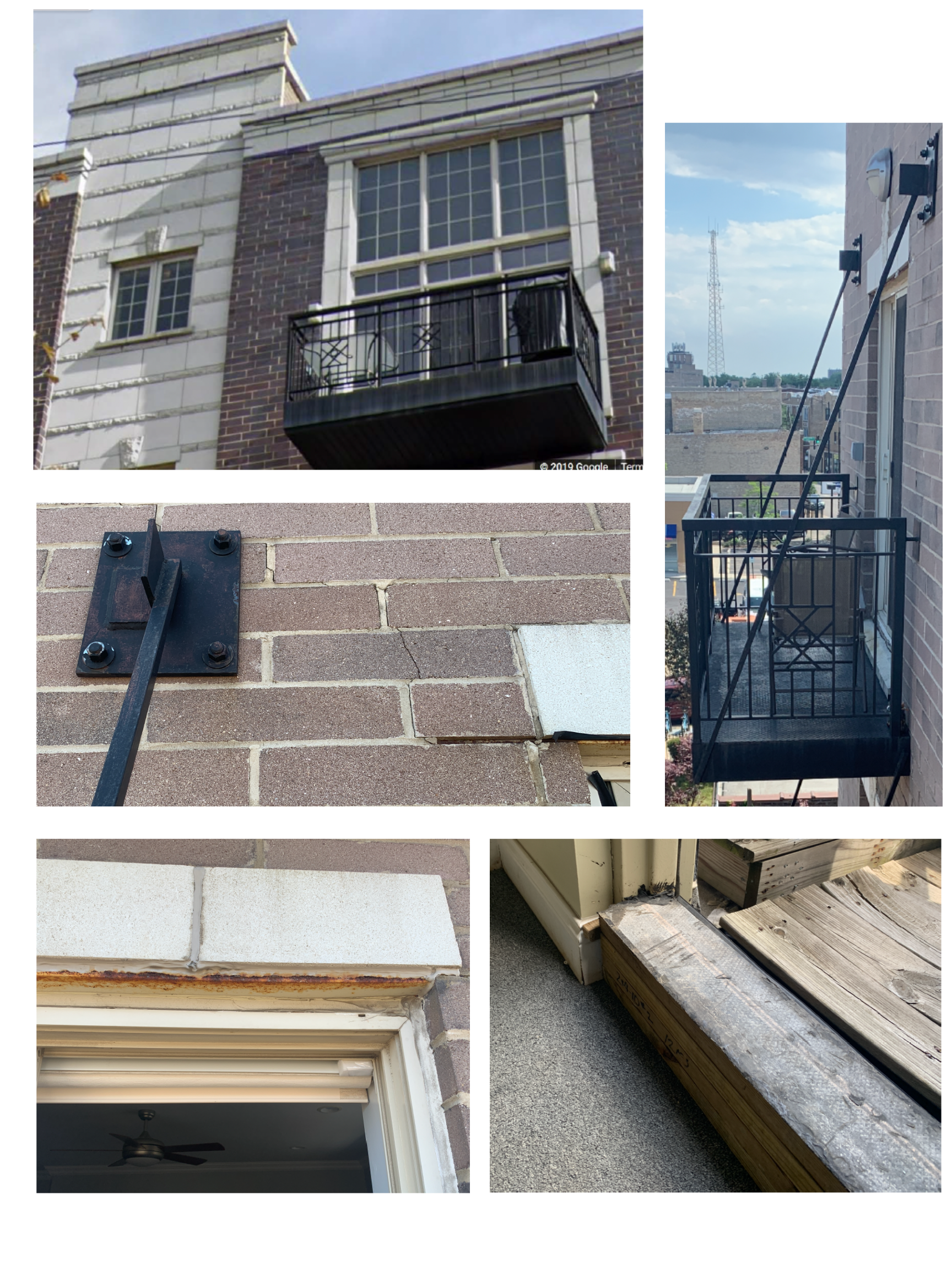
Door sill flashing:
The roof membrane is attached to the face of the limestone sill. This the equivalent to having a hole in the roof. Water saturates through the sill and leaks into the building.
Repair Process:
- Remove decking, storm door, limestone sill
- heat weld roof membrane into the empty sill location. This is what prevents water from going down into the house.
- Install pan flashing on top of the roof membrane
- Reinstall limestone sill
We need to remove the deck and sill to really understand the existing condition. We have flashed a variety of conditions so we are prepared for whatever we expose.
Refinish Original Historic Storm Door:
Strip door, glue veneers and coat with West system epoxy.
Roof: Install roof ventilation at the parapet walls. Vent the top and the interior of the parapet. This will carry away water laden air before it can turn to condensation.
Venting process includes the following steps:
- Remove roof membrane from the interior perimeter of the parapet walls.
- Cut back the roof sheathing to expose the joists.
- Install a plastic sheet to separate the insulation from the masonry.
- Install new roof membrane and vented sheet metal.