Feb 2020 - Phase 1, Parts 4 & 5 – Dog House (Stairwell Building) Repairs, Roscoe Village
Information below from WickRight General Contracting proposal February 2020
Phase 1 continued ...
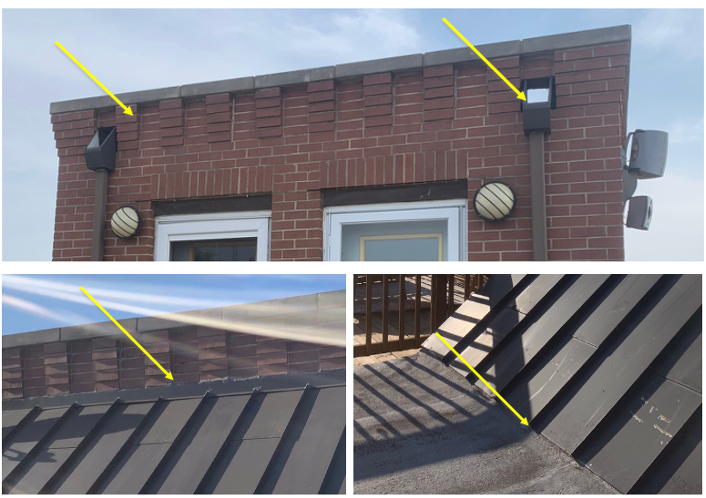
Part 4 Dog House: Fix scupper (gutter/downspout assembly), roof/capstone and flashing
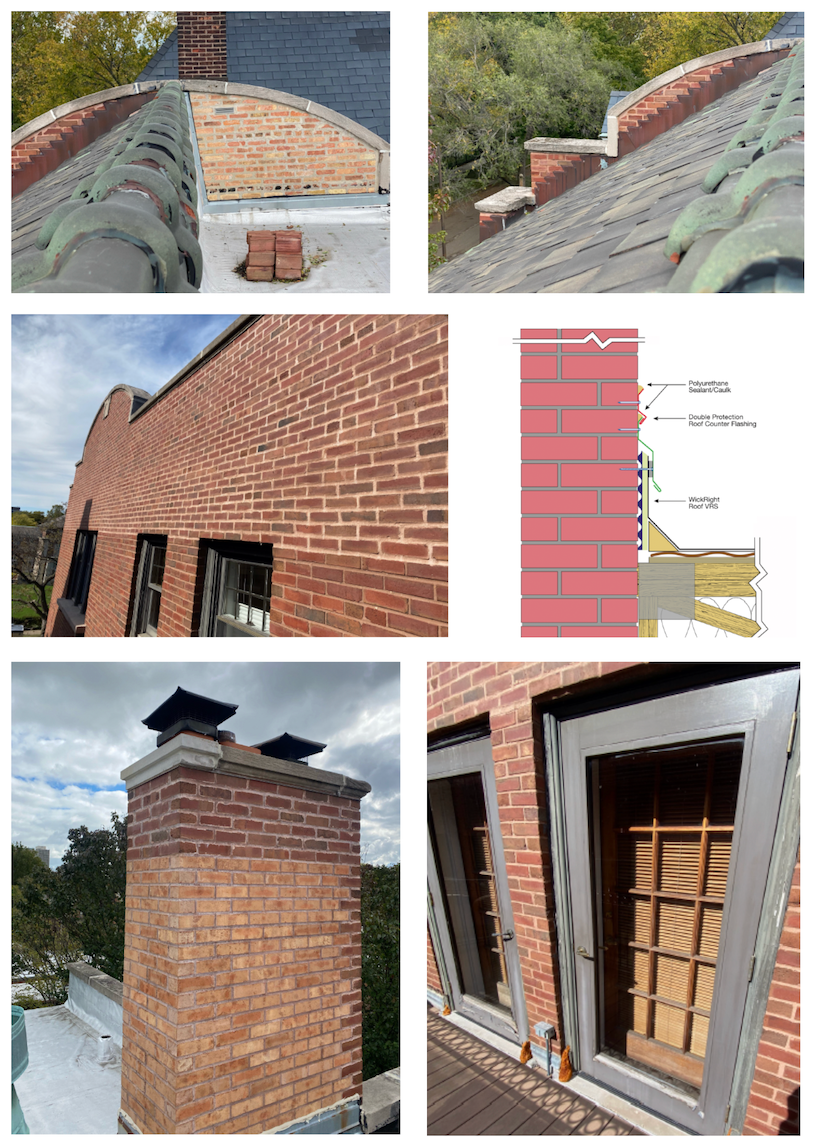
There are various options to address the construction of the doghouses (stairwell buildings) that is likely allowing moisture into units below and migrating to other locations within the building. The tops of the doghouses have Corbels (multi-level brick details that stick out every few feet, top picture, arrow to the far left). Behind the corbels there is a layer of brick and cinder block, just like the roof parapets, that are taking on moisture.
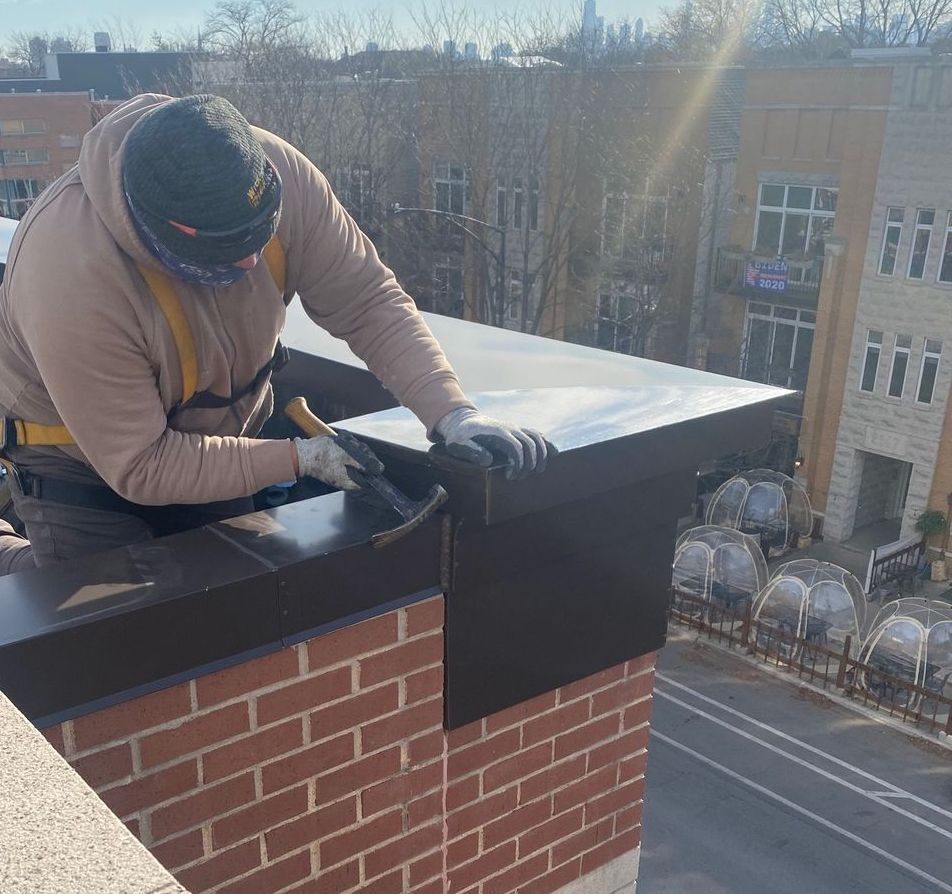
Our solution is to re-work the interior side of the capstone (the side you can’t see), expose the cinder block core and put a metal coping over the entire limestone capstone so there is no entry point for water. Metal copings are a cost-effective way to prevent water intrusion. We will also install ventilation to allow trapped moisture to evaporate and prevent condensation accumulation. This method will generally allow the exterior appearance to remain unchanged. In addition, the doorways, lights, scuppers, etc. need to be sealed.
Part 5 Dog House Roof: Change current “standing seam” doghouse roofs to a modified bitumen roof connection
The slanting metal roofs that run from the top of the dog houses (above the doors) to the main roof have to be completely removed to re-work the modified bitumen membrane underneath, especially at its termination junction with the main roof.
During the replacement process, ventilation of the angled roof will be built into the structure. This is an important part of the process that will mitigate condensation in the roof cavities. When the new roof material is installed (either a less expensive metal than is currently there or a type of roof membrane), a removable starter "course" will be installed at least 14”-16” uphill from the base of the roof framing.
Think of it as needing a way to both introduce air into the angled upper roof and allow air out of the lower roof.